Turning Around Troubled Schools
Posted on | June 9, 2010 | Comments Off on Turning Around Troubled Schools
Markham Middle School in Los Angeles has become the poster child for the systemic failure to turn around troubled schools.
In 1997, Markham was on the bottom of the heap in 1997 when the average student scored in the 16th percentile in math and the 12th in reading. Since then, the Los Angeles Unified School District and the state have subjected it to at least three different intervention programs costing upward of $3-million. Still, in 2009, only 12 percent of Markham’s students scored proficient or advanced in English and 8 percent in math. The English scores declined for 48 percent of the students, and math scores declined for 59 percent between 2008 and 2009.
One would think that drastic measures would be called for. Read more
Some Lincoln Republicans Meet The ‘Do It’ Democrats
Posted on | June 5, 2010 | Comments Off on Some Lincoln Republicans Meet The ‘Do It’ Democrats
Yesterday, I wrote in the Huffington Post about a delightful woman in Menlo Park who has taken to tilting at windmills.
In all other respects, Jennifer Bestor seems quite sane, but she felt called to take on the tax inequity caused by the way Proposition 13 treats commercial property. Unlike houses, businesses don’t sell that often, and even when they do there are cleaver ways to execute a sale so it does not trigger reassessment. More about Bestor in the Huff Post.
But what I found interesting was her personal politics. Bestor calls herself a “Lincoln Republican.” Her family linage extends to an ancestor who served in the Illinois legislature with Abe, and she channels that part of Lincoln who saw government as a way to get necessary things done. Public education, for example.
We might remember what while Lincoln was trying to find a general who would actually fight the South, he managed to buy Alaska, pass the land-grant college act that would lead to a century of American supremacy in higher education, and, then there was that thing about the transcontinental railroad. Three years after the war’s end, rails spanned the continent.
Other than David Brooks, I haven’t met a lot of Lincoln Republicans. There must be more out there, but I think I am seeing a lot of Lincoln Democrats.
These are the folks who have tired of interest group liberalism, or just interest group deadlock.
They have come out fighting to make public services work and to redefine their nature.
For some, in education, this fight has been identified with making achievement the new civil rights. The Education Trust provides an example. That organization has been dogged–unreasonably so in some cases–about student achievement, and their positions represent an historic break from the dominant belief in class or cultural reproduction as an excuse for low performance among African-Amerian and Latino youth.
Last week I got an email from them announcing their opposition to seniority in assigning teachers at low performing schools and favoring allowing schools to retain their most effective teachers regardless of length of service. In this, as in other positions, the organization places itself crosswise with the California Teachers Association, which is bound by the terms of its own contracts to defend seniority. The CTA is stuck–partly because it has a demonstrated inability to think over the horizon–a victim of its own past and the interests associated with contracts that create workplaces where success is difficult.
In contrast, new league of fix-it Democrats is willing to push back against the stalwarts of the party to get public services to work. Teacher unions have taken a good part of the flack for standing in the way of reform. They deserve some of it, but the problems extend to the entire institution. The process of teaching and learning needs to be rethought and reworked, but that’s another story. The point of this story is that we now see a league of Democrats willing to push back against the system. Sometimes wisely, sometimes very smartly.
These folks are willing to do straight-on, “in-your-face” politics to get things done. Los Angeles School Board member Yolie Flores Aguliar comes to mind. Tired of inaction, she introduced the Public School Choice motion last summer that has stirred the district, teachers union, and charter operators to rapid action.
So, what if the new league of Democrats, who want government to be productive, got together with the Lincoln Republicans, who want to mend public finances? Would there be a new political party or just a government that got things done?
A Grand Mother’s Day
Posted on | May 9, 2010 | Comments Off on A Grand Mother’s Day
We visited Charles and Tracy over Mother’s Day and were treated to their legendary hospitality. Walked into Laguna Beach to the Big Fish Restaurant for delicious raw, and a little cooked, fish. Stopped into the Royal Hawaiian for an after dinner drink and a look at the Lakers finish over Utah. Grand. But also look at Nick Kristof’s column in the New York Times. It should be Mothers’ Day, for all the moms in the world. If we spent an amount equal to the $14 billion that we spend on the holiday, we’d make a marked improvement in the lives of women worldwide.
“Learning from L.A.” Recognized as Publication of Year
Posted on | May 5, 2010 | Comments Off on “Learning from L.A.” Recognized as Publication of Year
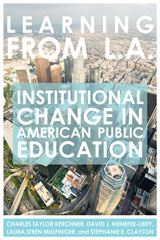
The American Education Research Association interest group on District Research and Reform has named Learning from L.A.: Institutional Change in Public Education as its publication of the year. This is a great and congenial group that has the wisdom of beginning its business meeting with good wine and cheese followed by a first-rate discussion of federal education policy by a panel that included my CGU colleague Carl Cohn. LLA has also been recognized as one of the academic books of the year by Choice magazine, a publication of the American Library Association.
Also, Policy Analysis for California Education (PACE) has published a policy brief based on the book, which can be freely downloaded. And, the book has its own Facebook page that I hope will become a discussion site as it develops.
The policy brief summarizes the book and its advocacy for the five policy levers that will move the Los Angeles Unified School District beyond what we call “permanent crisis”:

Signing books at the Harvard Education Press booth at AERA
- Legislation to allow LAUSD to create autonomous sub-districts.
- Send money directly to schools.
- Create positive incentives for students, teachers and administrators.
- Invest in a technological infrastructure for student learning.
- Deliberately add a variety of learning options and support choice among them.
PACE has also published a guide to candidates with a handful of the best ideas about what needs to be changed in California Public Education. It’s Reforming Education in California: A Guide for Candidates and Citizens, reiterates much of what policy wonks have been saying for several years: that schools should get more flexibility but that they should target their resources, and that policies should be designed around continuous improvement.
So far, there is no evidence that any candidates are listening. As John Fensterwald reports, Whitman and Poizner continue view charter schools as magic bullets despite evidence to the contrary, and their campaigns are a marvel in superficiality.
A Feel Good Look at Learning’s Future
Posted on | April 28, 2010 | Comments Off on A Feel Good Look at Learning’s Future
 I have written warmly about Scotland’s national education intranet service, Glow, and at the end of the piece asked, “why can’t this be done here?” In part, I am finding that it can…and is. The Los Angeles Unified School District has an ambitious technology plan, has spend a bundle on infrastructure, and green shoots of applications are beginning to appear at the schools.
Last Saturday I visited the District’s annual Infotech conference to look at what students and teachers were doing with learning and technology. At the Los Angeles Convention Center, I was struck by the extent that almost everything I saw was the result of teacher initiative. The District, and grant funds, made access to technology possible, but it was teacher and student sweat equity that created the new forms of teaching and learning. Read more
A Word from Professor Drucker…and Friends about Education Standards
Posted on | April 28, 2010 | Comments Off on A Word from Professor Drucker…and Friends about Education Standards
 The folks at the Drucker Institute have put up an interesting interchange about common educational standards. There are clips from Peter Drucker himself, comments from Rick Wartzman, executive director of the Institute, and some thoughts from Dave Levin, co-founder of KIPP. I also make an appearance, courtesy of Phalana Tiller, who is putting together the interactive feature called Drucker Apps. It’s nice to hear Peter again, even posthumously; he was a grand and supportive colleague.
A New Look at Europe
Posted on | April 25, 2010 | Comments Off on A New Look at Europe
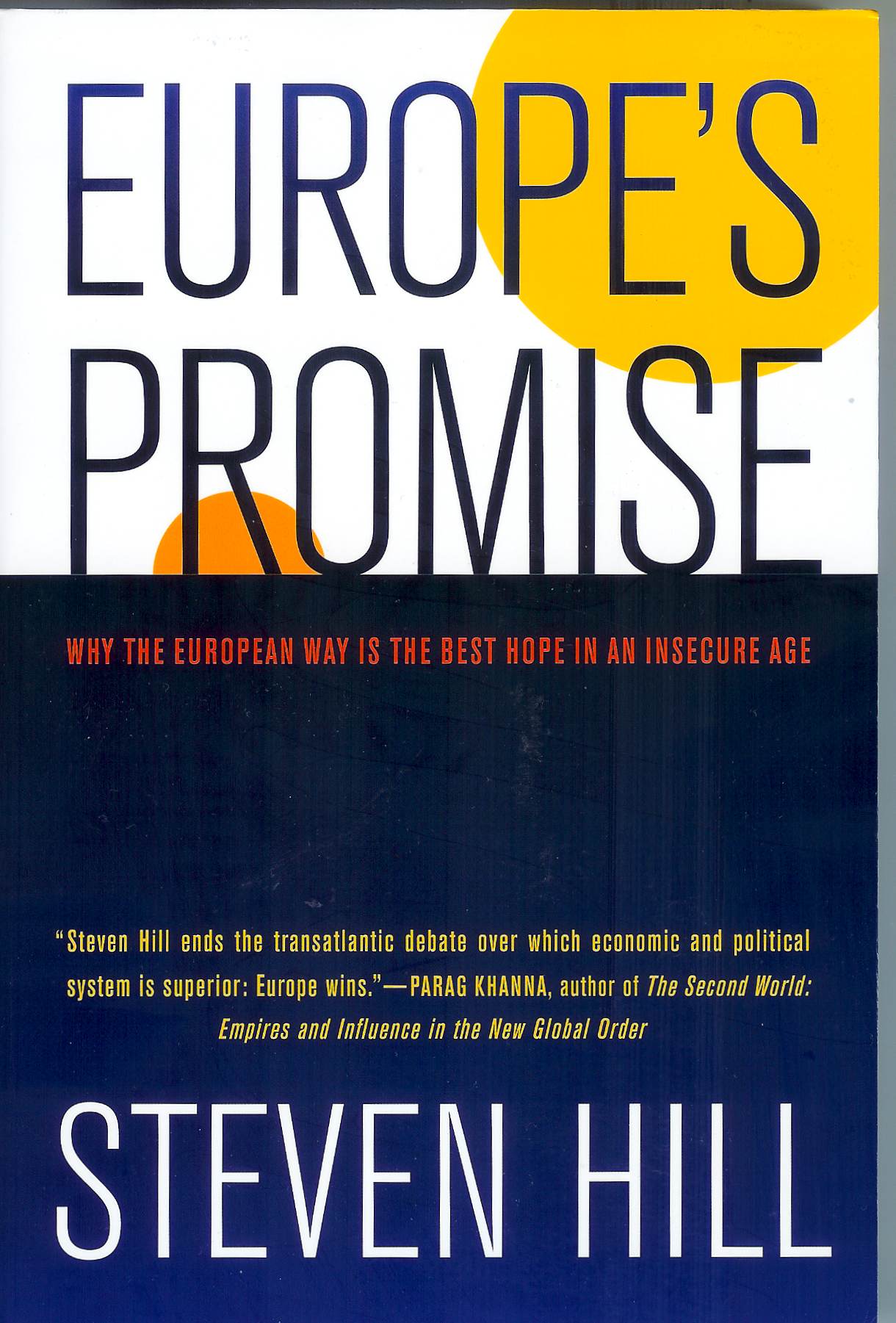 On Thursday, I wandered across campus to hear Steven Hill talk about his new book, Europe’s Promise. Hill is the director of the political reform program at the New American Foundation, and a will-published policy writer who has been studying what we inaccurately refer to at the Old World for a decade.
As is so often the case with serious books, his argument follows the colon: Why the European way is the best hope in an insecure age.
Here, at last, was someone who sees Europe through the same eyes as I do: as economically dynamic and socially invested, not as a historically interesting but moribund land of high taxes and an outdated welfare state. Every time I’ve traveled in Europe, I come away with the notion that it works pretty well. In the two thirds of a century since it was devastated by World War II, it has undergone a remarkable transformation. Read more
Can Teachers Run Their Own Schools?
Posted on | April 19, 2010 | Comments Off on Can Teachers Run Their Own Schools?
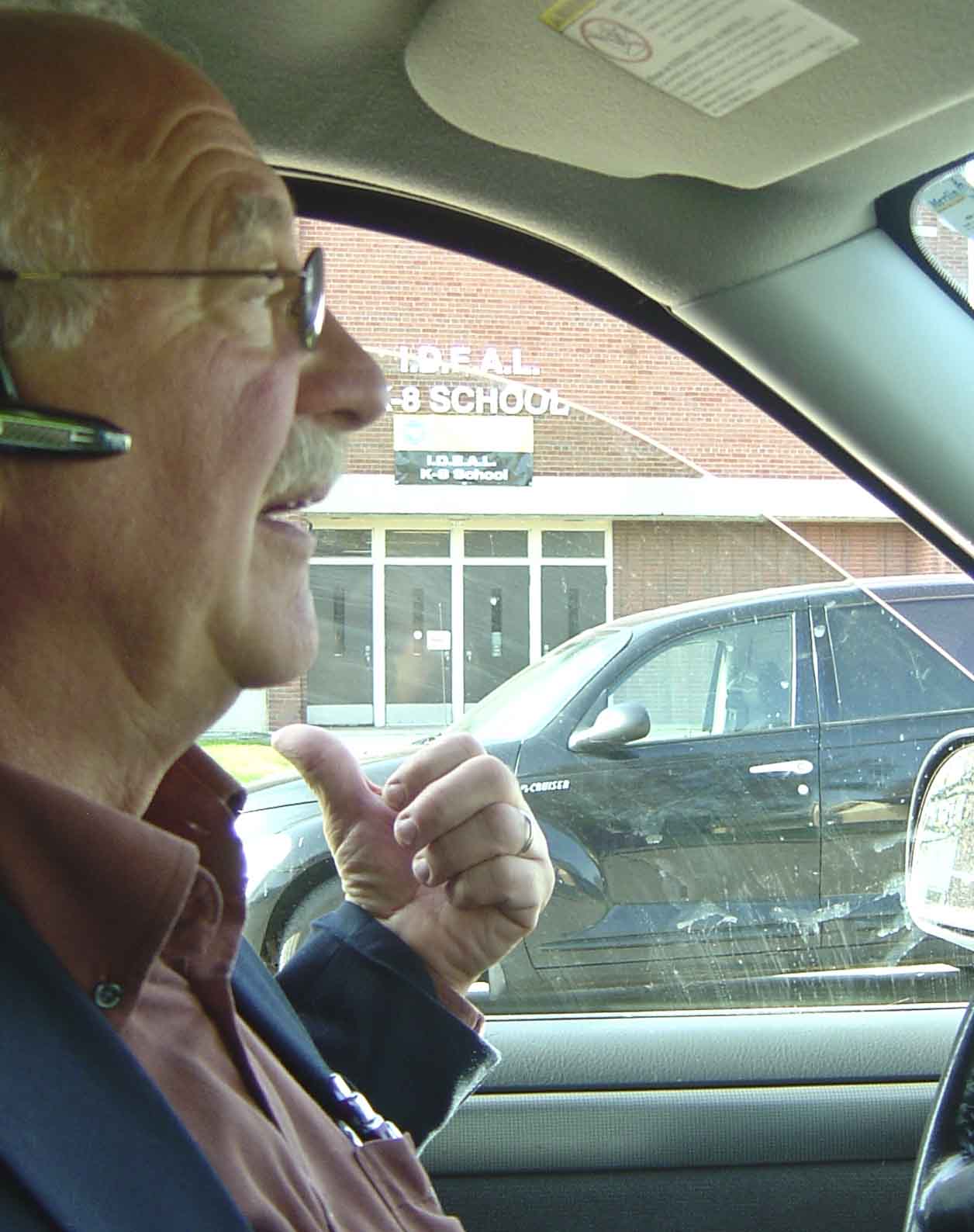
John Parr at the IDEAL School in Milwaukee
As a part of the “learning differently” study, I have visited several schools run as teacher cooperatives: no principal, flat organization.
Cooperatives, of course, are a great American tradition. We think of the limited liability corporation as one of the great social inventions of the last two hundred years, but cooperatives have been a part of the fabric of our society in ways that are just as important. Agricultural cooperatives made the production and marketing of citrus in Southern California possible and commercially viable while preserving family ownership of the means of production for more than fifty years. Think Sunkist. Cooperatives brought hundreds of farmers together throughout the upper Midwest. Think Green Giant. The spirit of cooperation made American civic life possible. Think Tocqueville. But can cooperatives work for schools? Read more
Peer Review Redux
Posted on | April 13, 2010 | Comments Off on Peer Review Redux
 The idea of peer review for teachers, that I wrote about in United Mindworkers, and A Union of Professionals in the 1990s has now come alive again. See this recent Huffington Post piece.
First there is a new book by Jennifer Goldstein, published by Teachers College Press. It describes the work of the PAR panels in detail and takes the mystery out of the process.
Also, Susan Moore Johnson along with her students at Harvard has put up a first rate user’s guide to peer review.
Steven Sawchuk of Education Week recently reviewed the state of play and the districts with current programs.
For earlier work by Julia Koppich and me, please click on the Projects link at the top of this page.
A Not Quite Palace Revolt
Posted on | April 8, 2010 | Comments Off on A Not Quite Palace Revolt
Bruce Fuller from UC Berkeley has written about the politics of LAUSD in Education Next. Under the title “Palace Revolt in Los Angeles?” he recounts the story of Mayor Antonio Villaraigosa’s attempts to control the school system and particularly how his connection to grassroots Latino activism and United Teachers Los Angeles.
The connection between grassroots community organizing and the union is important. In the wake of the public school choice process in February, when Pilot School applications were heavily favored over those from charter schools, attention has largely turned to the apparent victory for UTLA in out-politicking the charter management organizations. Read more
'On California' at EdWeek.org
I have concluded my opinion blog on the Golden State's politics and education policies at EdWeek.org. An archive of the 281 posts can be reached by clicking HERE
Learning 2.0
Learning 2.0 is the next full scale version of public education, one that builds on the capacity of the Internet age.
The five elements of Learning 2.0 are explained by clicking HERE:
- Mixing acquisition of knowledge and practice, head and hands.
- An individual education plan for everyone.
- Understanding that students are the real workers in the education system.
- Unbundle teaching, testing, and mentoring.
- Add collaboration and solving tough, ambiguous problems to the list of basic skills.
Recent Posts
- Give Us 25 Minutes; You’ll Get Better 24 Hours
- New Stories on How California Flipped 7 U.S. House Seats from Red to Blue
- Old at the Beach
- A 4th of July Salute to a Courageous Judge: Remembering Paul Egly
- It’s More Than Resistance to Trump
- ‘Dreamers’ Find Allies Among Their Teachers
- How To Make the Next LAUSD Superintendent Successful
- Go, Visit the Whitney Plantation
- Nomadland: Exploring America’s Mobile Army of Older Workers
- Here’s The Peace Dividend In Los Angeles Charter School Wars
Recent Projects



About
 Charles Taylor Kerchner is an Emeritus Professor and Senior Research Fellow at Claremont Graduate University. My daily musings appear in the blog. The archives of my EdWeek blog are available via link under the 'On California' head. Some of my photography can be seen by clicking on 'Gallery.' And numerous links to academic work and other research and commentary can be found by clicking on 'Projects.'
Search
Subscribe to my Blog
Archives
- August 2020
- July 2019
- August 2018
- July 2018
- April 2018
- February 2018
- January 2018
- December 2017
- November 2017
- September 2017
- August 2017
- July 2017
- December 2015
- September 2015
- September 2014
- May 2014
- April 2014
- March 2014
- February 2014
- January 2014
- December 2013
- November 2013
- October 2013
- September 2013
- August 2013
- July 2013
- June 2013
- May 2013
- April 2013
- March 2013
- February 2013
- January 2013
- November 2012
- October 2012
- July 2012
- April 2012
- March 2012
- February 2012
- January 2012
- December 2011
- November 2011
- October 2011
- September 2011
- August 2011
- July 2011
- June 2011
- May 2011
- April 2011
- March 2011
- February 2011
- January 2011
- December 2010
- November 2010
- September 2010
- August 2010
- July 2010
- June 2010
- May 2010
- April 2010
- March 2010
- February 2010
- May 2009
- August 2008
- June 2008
- September 2007
- August 2007
- December 2005
- June 2005
- January 1999
Blogs I Read
- Arts & Letters Daily
- California Watch, reporting from the Center for Investigative Journalism
- Conditions of Education from PACE
- District Dossier
- Ed Source Today
- Joanne Jacobs–Linking and Thinking
- L.A. School Report
- Politics K-12: Michele McNeil and Alyson Klein
- Rough & Tumble: Today's California Politics News
- Teacher Beat: Stephen Sawchuk
- The Hechinger Report
- The Quick and the Ed–Education Sector
- This Week in Education: Alexandar Russo